RapidILL Working Group Releases Script Template for Document Delivery Notices
The deadline for complying with the new federal digital accessibility regulations under ADA Title II is rapidly approaching, and libraries across the country are reviewing workflows to ensure they meet all requirements. Under the U.S. Department of Justice’s 2024 update to Title II of the Americans with Disabilities Act, public institutions, whether they are libraries, colleges, or universities must ensure their digital content—including scanned documents sent through library services—meets WCAG 2.1 AA accessibility standards by April 24, 2026. Smaller public institutions serving populations under 50,000 have until April 2027, but the requirements apply to the same types of digital content and services.
Because Interlibrary Loan and Document Delivery is one area where libraries routinely distribute PDFs created from print materials, these regulations appear to apply to Interlibrary Loan and RapidILL workflows, not just websites or LMS environments.
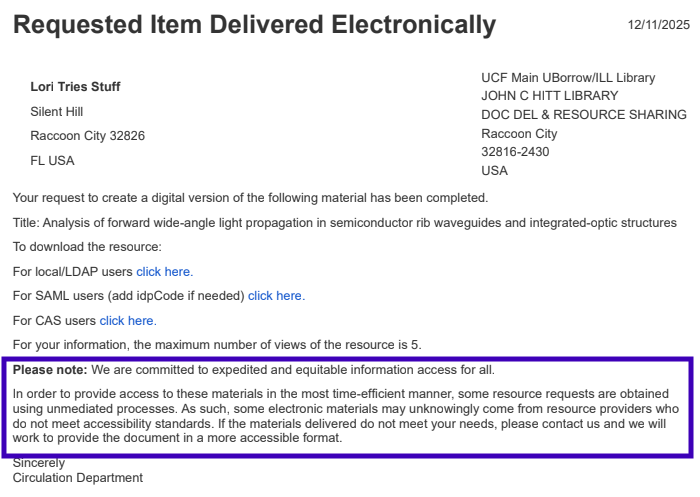
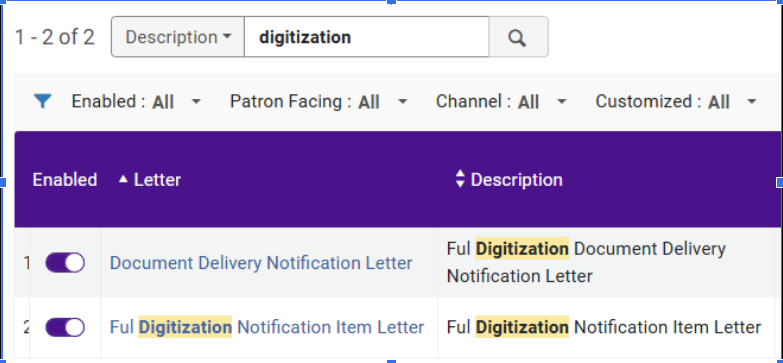
To help libraries adapt, the RapidILL Working Group has developed a simple, ready-to-implement template that adds a short accessibility script to the Document Delivery Notification Letter (sent when the document is linked) and the Ful Digitization Notification Item Letter (sent when the document is attached).
This script informs patrons that requested materials come from outside sources and may not always be fully accessible, the library is willing to address any accessibility issues encountered by the patron.
For both letters, open the XSL block and scroll to the bottom. Find the @@sincerely@@ label toward the very bottom of the letter and add this in directly before the <tr> line that precedes it:
<tr><td><b>Please note: </b> We are committed to expedited and equitable information access for all.</td></tr>
<tr><td>In order to provide access to these materials in the most time-efficient manner, some resource requests are obtained using unmediated processes. As such, some electronic materials may unknowingly come from resource providers who do not meet accessibility standards. If the materials delivered do not meet your needs, please contact us and we will work to provide the document in a more accessible format. </td></tr>